sales@cupalloys.co.uk
Tel: 01246 566814
HomeNewsNewsletterBasketCheckoutOrder StatusSitemap
Print-friendly version

Silver Solder Fluxes

"The silver solder melts - but it won't flow - it just goes into a ball and falls off"

There is nothing wrong with the silver solder. You have a flux problem!

The flux to be used with any silver solder  is decided by three considerations all of which must be satisfied. These are
a) the melting range of the silver solder
b) the parent materials.
c) the heating cycle

Silver Solder Flux
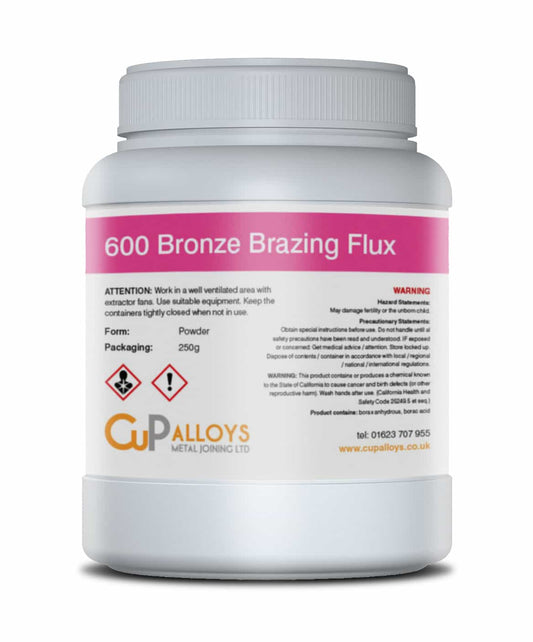
Generally speaking 99% of all silver solder joints can be successfully made using one of two basic flux types. They behave in exactly the same way as the solder. They flow into the joint gap by capillary action prior to the alloy melting removing the oxides and keeping the joint "clean" at temperature.

EF Flux
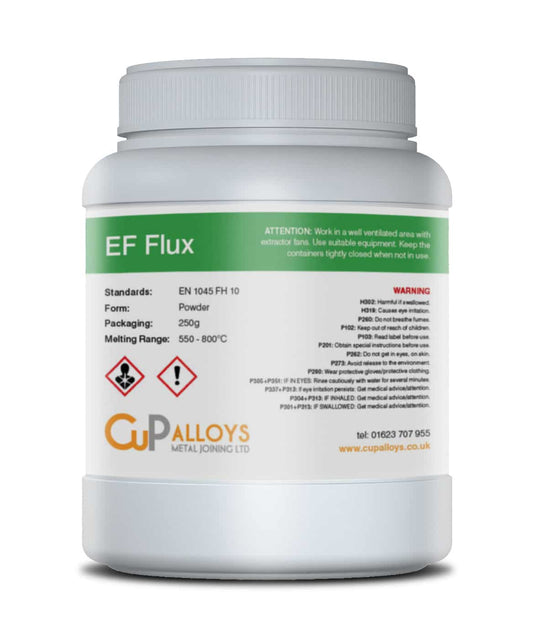
By far the most popular flux used with silver solder is this low melting point flux based on alkali floro-borates. It melts at approx 550 deg. C, has excellent cleansing and capillary flow characteristics (essential for successful brazing) and stays active for a reasonable length of time. The active life of EF "Easy Flowing Flux" is sufficient to cope with most silver soldering heating cycles.
It will enable joints to be made between the common parent materials. These are copper and its alloys, (eg brasses & bronzes), mild steel and cast iron. The exceptions are aluminium bronze containing more than 2% aluminium and stainless steel. These exceptions will be dealt with later.

HT5 Flux

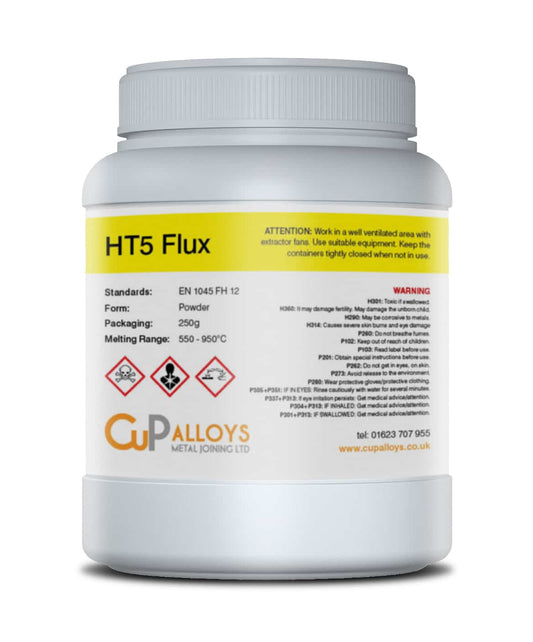
HT5 is a longer life flux suitable for stainless steel. Use with higher melting point silver solder or during protracted heating cycles.

Both fluxes are available in 50 gm sachets, 250gm and 500gm containers.

Hint 1
Both these fluxes become fully molten and working at a temperature of about 560°C. This is an excellent guide to the joint temperature. Apply the silver solder only when the flux has melted. To do so beforehand leads to a tendency to heat the rod, it melts but the joint is cold and freezes the alloy. The result is a superficial joint with no penetration.


Hint 2
When mixing the powder into a paste add a few drops of detergent.
It helps make the powder into a smooth paste,
it helps the paste "stick" onto the parent materials.
and if the paste dries out a little (and it will!) it allows the paste to be reconstituted.

Hint 3
Brazing Aluminium Bronze with up to 10% aluminium?
Add 20% by weight of table salt to the flux powder. The increase in chloride ions helps to remove the aluminium oxide.


You are viewing results 1 to 8 of 8
EF Flux 250 gm pot
EF Flux 250 gm pot
General purpose flux for silver solder
Our price: £10.70
EF Flux 50 gm sachet
General purpose silver solder flux
Our price: £3.60
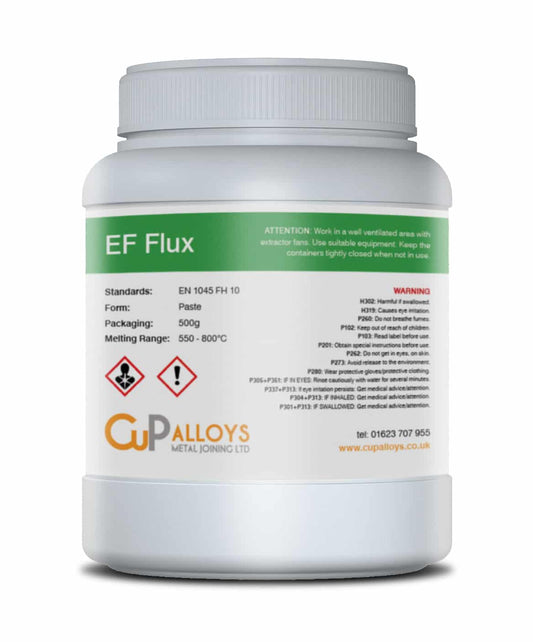
EF Flux 500 gm pot
EF Flux 500 gm pot
General purpose silver solder flux
Our price: £17.70
EF Flux Paste 1 kg
Pre-mixed general purpose flux paste for silver solder
Our price: £45.20
EF Flux Paste 200 gm pot
Pre-mixed general purpose flux paste for silver solder
Our price: £12.80
HT5 Flux Powder 1 kg pot
Flux for use with high temperature silver solders, or long heating times or on stainless steel.
Our price: £38.40
HT5 Flux Powder 250gm pot
Flux for use with high temperature silver solders, long heating times or on stainless steel
Our price: £12.30
HT5 Flux Powder 50gm Sachet
Flux for use with high temperature silver solders, long heating times or on stainless steel.
Our price: £4.10
You are viewing results 1 to 8 of 8
security.gif